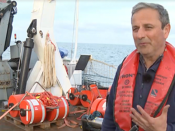


Imagem cedida por CC
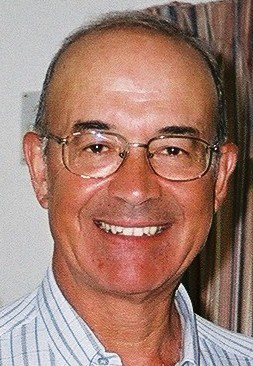
João Alexandre Medina Corte-Real, professor jubilado da Universidade de Évora, docente em Ciências ULisboa durante mais de 30 anos, faleceu a 31 de outubro. A missa de corpo presente decorreu na Igreja de Santiago, em Évora, seguindo-se o funeral, esta sexta-feira, 2 de novembro. A Faculdade lamenta o triste acontecimento, apresentando as condolências aos familiares, amigos e colegas.
Ciências ULisboa publica “A brilliant teacher”, um texto em sua homenagem da autoria de Carlos da Camara, professor do Departamento de Engenharia Geográfica, Geofísica e Energia e investigador do Instituto Dom Luiz, seu aluno, orientando, assistente e, durante muitos anos, colaborador mais próximo.
A brilliant teacher
"Sempre pensei que não seria tarefa fácil escrever o que quer que seja acerca do João Corte-Real no dia em que soubesse da notícia da sua morte. Tive, no entanto, a sorte de há uns anos me terem pedido que escrevesse algumas palavras aquando da jubilação do João. Ora, sem dúvida, a melhor forma de recordar os que partem é falando vivamente do muito bom que foi ter estado com eles na vida. Acresce que, tal como o João, sou cristão pelo que a morte, para nós, é apenas mais uma etapa da vida.
Transcrevo, assim, o texto intitulado 'A brilliant teacher' que tive oportunidade de escrever aquando da jubilação do João. Não é por preguiça que o faço, mas apenas porque o texto continua hoje vivo e válido, palavra por palavra. O texto é em inglês, mas, bem vistas as coisas, é a linguagem da ciência a que o João tanto ligou.
'"I’ve always enjoyed explaining physics. For me it’s much more than teaching: It’s a way of thinking. Even when I’m at my desk doing research, there’s a dialog going on my head. Figuring out the best way to explain something is almost always the best way to understand it yourself'. These words were written by Leonard Susskind, father of string theory, but they could also have been written by João Corte-Real because he is one of the very few I met that I consider a brilliant teacher in all its embracing sense.
My first contact with Professor Corte-Real goes back to 1978, a year that has stayed in the memory of all students of the Faculty of Sciences of the University of Lisbon because, on the night of the 17th to the 18th of March, the old building was almost completely destroyed by a terrible fire. Professor Corte-Real was teaching at the time the course of Statistical Physics. Despite the difficulty of the subject and the high level of the course, his lectures were crystal clear, and we were all submerged by the amount of knowledge Professor Corte-Real had been transmitting at a pace that I never had met before! Those of us that thought the fire might represent an opportunity to recover our breaths were deemed to be deceived; Professor Corte-Real soon informed that the lectures would resume in the premises of the Institute of Physics and Mathematics.
I am mentioning this first episode because it already contains the marks of Professor Corte-Real’s character: a full dedication to his duties and to his students and an uncommon willingness to share his knowledge that covers an amazing wealthiness of subjects including calculus and analysis, numerical methods and programming, statistical and quantum mechanics, thermodynamics, meteorology and climatology. Professor Corte-Real is always the first person that comes to my mind anytime I come up with that type of difficulties that are not explained in textbooks!
I met again Professor Corte-Real the next year, at the National Committee for the Environment, where we were part of the team of the first environmental study of the Tagus estuary. It was there that, for the first time and thanks to Professor Corte-Real, I understood the true meaning of a balance equation and of the theoretical and practical usefulness of the lagrangian and eulerian formulations. This was the beginning of a long collaboration and especially of a solid friendship of almost forty years.
Now it would certainly be appropriate to start enumerating the long list of achievements of Professor Corte-Real as a teacher and as a researcher. But this would distract from the issue I want to point out; that all I am, as a teacher and as a researcher, I mainly owe to Professor Corte-Real and that I would be very proud if he includes me as one of his achievements. My first research work, entitled 'Equations of movement of a continuum in non-inertial frames', is dedicated to 'My friend and scientific advisor, Professor João Corte-Real, who as an advisor has always been a friend and as a friend has always advised me'. If I had to repeat a thesis under Professor Corte-Real’s advisorship, I would have rewritten exactly the same words.
I am counting on Professor Corte-Real for the years to come, at least until I get retired. I have a course in Thermodynamics to prepare and others in Remote Sensing, Dynamical Meteorology and Global Circulation of the Atmosphere that need to be refreshed. So, João, please stay around and don’t change the number of your mobile phone.
Pelos vistos, o João não só mudou o número como mudou também de telemóvel. Agora chama-se oração, as chamadas são gratuitas, mas o resultado é o mesmo. Um abraço, João."