aereal view of Laboratório Marítimo da Guia

R&D Infrastructure

Herdade de Ribeira Abaixo

Covering more than 221 hectares, the Herdade de Ribeira Abaixo has served as a living laboratory for hundreds of students, researchers and teachers to conduct experiments in the field of ecology over the last 30 years. The space, which is now used as a field station by the Centre for Ecology, Evolution and Environmental Change (CE3C), is located in the heart of the Serra de Grândola, in the district of Setúbal.

The estate is crossed by temporary streams and is dominated by cork oak forests. In the first surveys, carried out in the 1990s, more than 400 species of plants, more than 200 species of fungi, 32 species of mammals, 12 species of reptiles, 74 species of birds and 155 species of insects were recorded – some of these species were classified as endangered.

In addition to rooms with eight beds, CIÊNCIAS researchers can take advantage of an eco-library, laboratories equipped for different tests and experiments, and a conference room.

Responsible researchers: Ana Isabel Correia, Francisco Fonseca, and Rui Rebelo

Location: Herdade de Ribeira Abaixo, Grândola

Contacts:

Telephone: +351 217 500 577 (CE3C)
Email: info@herdadedaribeiraabaixo.com

Guia Maritime Laboratory

Laboratório Marítimo da Guia (LMG) is a high developed research infrastructure located in Cascais, on the Atlantic coast, with a unique position for the development of advanced marine science. Managed by MARE – ULisboa, the LMG offers direct access to coastal environments and is equipped with advanced infrastructure adapted to multidisciplinary marine research.

The facility features open and closed aquarium systems integrated with life support systems, controlling temperature, pH, CO₂, oxygen, light, and salinity, all managed by an aquarium computer. Researchers benefit from climate- and light-controlled rooms, as well as dedicated rooms for marine culture of zooplankton, phytoplankton, fish, and invertebrates. Natural seawater, filtered and treated with UV radiation, is continuously available, ensuring experimental rigor and long-term studies.

The infrastructure also includes a biochemistry lab and a lab dedicated to machine learning workstations, supporting large-scale data analysis and artificial intelligence applications in marine science. Complementing the land-based resources, the LMG benefits from access to diving operations and vessels through a strategic partnership with the Cascais Naval Club, allowing for efficient integration between field and laboratory research.

Responsible researchers: Rui Rosa

Location: Avenida Nossa Senhora do Cabo, 939, 2750-374 Cascais, Portugal

Contacts:

Telephone: +351 214 869 211; +351 217 500 148 (MARE-ULisboa);

E-mail: rrosa@ciencias.ulisboa.pt

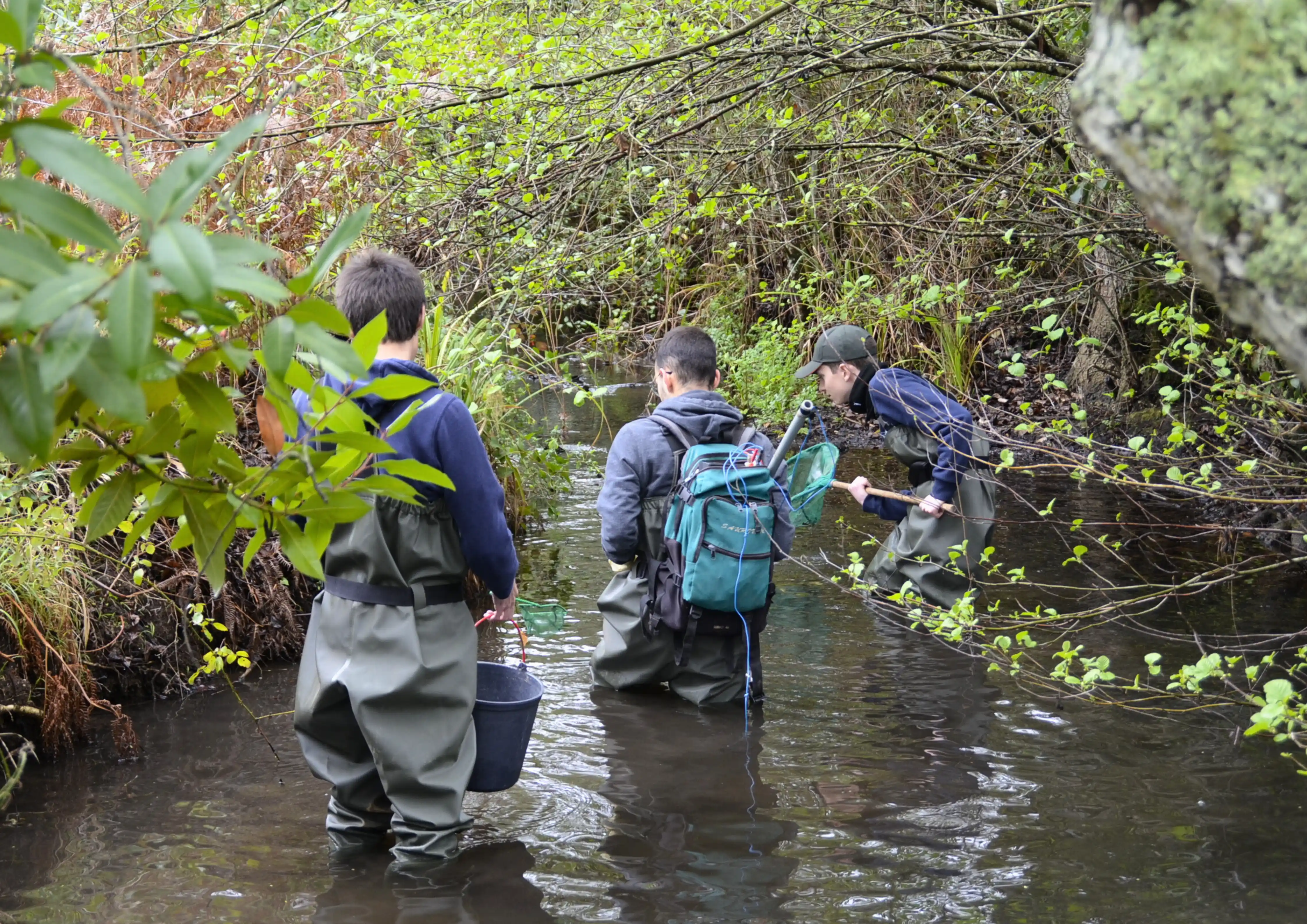
researchers inside a stream collecting samples

Stable Isotope Laboratory

The Stable Isotope Laboratory (LIE), also known as the Stable Isotopes Analysis Facility (SIAF), is part of the Centre for Ecology, Evolution and Environmental Change (CE3C) and is a unique infrastructure and essential resource for the local, national and international scientific community. Specialising in instrumental analyses of stable isotopes, the LIE offers a wide range of services, including stable isotope mass spectrometry, analysis of dissolved organic carbon (DOC), inorganic carbon (IC) and total carbon (TC) in water, as well as the determination of isotopic ratios.

The laboratory also plays an active role in training students and supporting research, offering scientific advice, sample processing and collaboration in experimental design. Combining analytical rigour, innovation and specialised technical support, the LIE is a benchmark in the promotion of science in various fields, such as ecology, biology, geosciences and environmental sciences.

Responsible researchers: Cristina Máguas Hanson

Location: Faculty of Sciences, University of Lisbon - Building C2, Floor 1, Room 2.1.16, 1749-016 Lisbon, Portugal

Contacts:

Telephone: +351 217 500 577 (CE3C)
Email: cmhanson@ciencias.ulisboa.pt

Greenhouse Park

The Greenhouse Park of the Faculty of Sciences of the University of Lisbon is a collective infrastructure that allows the simulation of different environmental conditions for the production, monitoring, and acclimatisation of terrestrial plants, as well as the obtaining and maintenance of endomycorrhizal inoculum.

The Park consists of two greenhouses, each with two cultivation areas, which allow the production of plants for educational purposes and research projects, namely biochemical, physiological and reproductive studies related to the adaptation of plants to climate and soil changes.

Location: Faculty of Sciences, University of Lisbon, 1749-016 Lisbon, Portugal

Contacts:

Telephone: +351 217 500 000

Email: info@ciencias.ulisboa.pt

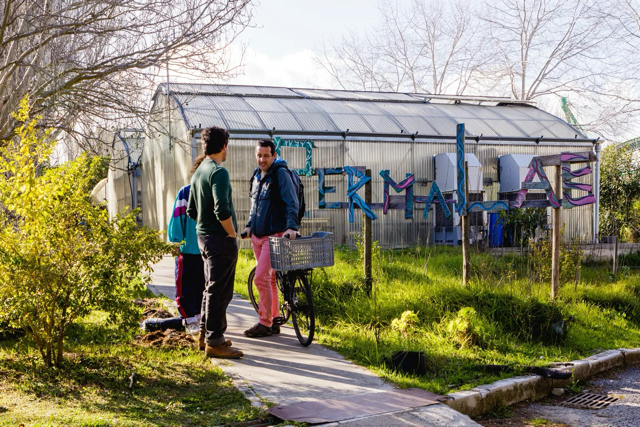
Students talking outside Greenhouse Park

Infrastructure managed with the contribution of Ciências

LOUSAL CIÊNCIA VIVA CENTRE

The Lousal Ciência Viva Centre has converted a mine into an interactive and educational space that is committed to disseminating knowledge of physics, geology, biology and chemistry, while also revealing the principles of ancient mining and the old mine that once operated in the village of the same name in the district of Setúbal.

Opened in 2001, the museum complex located in the municipality of Grândola has CIÊNCIAS as one of its five founding members, with direct participation in the selection of management teams. It is through this commitment that around 30 professors and scientists from CIÊNCIAS have been regularly participating in the development of scientific and educational content for the different spaces of the Lousal Ciência Viva Centre.

Responsible researchers: Álvaro Pinto and Jorge Relvas

Location: Avenida Fréderic Velge, Lousal, 7570-019 Grândola

Contacts:

Telephone: +351 269 750 520/522;

Email: info@lousal.cienciaviva.pt

NATIONAL MUSEUM OF NATURAL HISTORY AND SCIENCE (MUHNAC)

Located on one of Lisbon's most famous and elegant streets, the National Museum of Natural History and Science has a centuries-long history with Ciências. It was there that the Noviciado da Cotovia (Lark Novitiate) was first established in the 16th century, and later the Royal College of Nobles operated there between 1761 and 1837.

In the 19th century, the Lisbon Polytechnic School was established, and after 1911, a new development paved the way for the Faculty of Sciences of the University of Lisbon, which only moved to Campo Grande, where it operates today, in 1985.

The Museum houses more than three million objects ranging from biological anthropology to zoology, not to mention the history of medicine, mineralogy and palaeontology, among other sciences. The Museum includes the Lisbon Astronomical Observatory (in Tapada da Ajuda), the Tropical Botanical Garden (in Belém), and attractions such as the former Laboratorio Chimico.

Location: Rua da Escola Politécnica 56, 1250-102 Lisbon

Director: Marta C. Lourenço

Contacts:

Telephone: +351 213 921 808

Email: geral@museus.ulisboa.pt

interior of MUHNAC

LISBON ASTRONOMICAL OBSERVATORY

Dating back to the 19th century and the reign of Dom Pedro V, it is a ex-libris of national scientific instruments. It is known as the Lisbon Astronomical Observatory, and no one can take away the place it has occupied in the history of science in Portugal and also in the definition of legal time. It was integrated into the infrastructure managed by the Faculty of Sciences of the University of Lisbon in 1995, after the last professional or scientific observations were completed in 1992.

The space located in the famous Tapada da Ajuda features 200 pieces of scientific equipment that are part of the Observatory's history and there is an archive full of curiosities, dating from 1905 to the present day. Since 2012, it has also been part of the National Museum of Natural History and Science (MUHNAC).

Director: Marta C. Lourenço

Location: Tapada da Ajuda 1300, Lisbon

Contacts:

Telephone: +351 213 921 808

Email: geral@museus.ulisboa.pt

Other infrastrutures

MICROSCOPY UNIT

The unit is equipped to operate with wide-field fluorescence microscopy, confocal microscopy, electron microscopy, and high-throughput microscopy. As an infrastructure that prioritizes the training of students and Ciências projects, the Microscopy Unit functions as one of the hubs of the Portuguese Bioimaging Platform. It also receives external visits. The Unit occupies two different spaces within the Ciências campus.

Responsible researchers and technicians: Rui Malhó, Luís Marques and Telmo Nunes

Location: Faculdade de Ciências da Universidade de Lisboa, 1749-016 Lisboa, Portugal

Contacts:
Telephone:
+351 217 500 000

E-mail: rmmalho@ciencias.ulisboa.pt

Algae culture collection

A living repository of microalgae cultures, housing the Algae Collection of the University of Lisbon, known as ALISU. Phytoplankton and microphytobenthos are some of the most prominent examples of a microalgae collection that attempts to reflect what is found in Portuguese rivers and estuaries. According to those responsible for the laboratory, the Algoteca's mission is to analyze and prevent negative effects of algal species in seas and oceans. The Algoteca maintains a link with the herbarium and seed bank of the National Museum of Natural History and Science.

Responsible researcher: Ana Amorim

Location: Faculdade de Ciências da Universidade de Lisboa, 1749-016 Lisboa, Portugal

Contacts:

Telephone: +217 500 148

E-mail: aaferreira@ciencias.ulisboa.pt

algae

BIOTERIUM

This laboratory space houses various experiments with animals and is therefore subject to strict control of practices and procedures in accordance with national legislation. The Bioterium has a room for marine organisms, two sections for freshwater fish, another room for amphibians, and finally, a space for small mammals, which includes two experimentation rooms. It has necropsy and quarantine areas, refrigerators and storage bins, and a washing room. It has a sanitary status with a biosafety level of ABSL1.

Responsible researchers:  Rui Rebelo, Joaquim Tapisso and Rui Patrício

Location: Faculdade de Ciências da Universidade de Lisboa, 1749-016 Lisboa, Portugal

Contacts:

Telephone: +217 500 000

E-mail: jstapisso@ciencias.ulisboa.pt

iXLab – TESTING

CENTRE

Discreet enough, and crucial when least expected, the Ciências Testing Centre has taken the front line in tracking the Covid-19 pandemic and revealed to the country the usefulness of a laboratory unit that analyzes samples collected in the community with the aim of tracking different types of biological or chemical threats that are circulating.

The iXLab is certified by the Instituto Nacional de Saúde Doutor Ricardo Jorge - INSA (National Institute of Health Dr. Ricardo Jorge), and licensed by the Entidade Reguladora da Saúde (Health Regulatory Entity). In addition to testing different samples, it can provide services to the academic community within the scope of projects with high safety requirements. It has an ongoing partnership with the Portuguese Army. And it has an effective capacity for 400 tests per day.

Responsible researchers: Ricardo Dias and Margarida Gama Carvalho

Location: Faculdade de Ciências da Universidade de Lisboa, 1749-016 Lisboa, Portugal

Contacts:

Telephone: +217 500 000

E-mail: rpdias@ciencias.ulisboa.pt

EXPERIMENTAL EVOLUTION UNIT

Inaugurated in 2024, the Experimental Evolution Unit is a laboratory unit with pioneering infrastructure at the national level, where internationally renowned research is developed. In this unit, the evolution of large populations of various organisms is studied in real time, from plants and insects to herbivorous and predatory mites.

This space for interdisciplinary collaboration aims to obtain answers to pressing and current questions about the evolution of agroecosystems, encompassing all trophic levels and parasite-host interactions, such as responses to factors like temperature, pesticides, and the immune system.

Responsible researchers: Sara Magalhães and Inês Fragata

Location: Faculdade de Ciências da Universidade de Lisboa, 1749-016 Lisboa, Portugal

Contacts:

Telephone: +217 500 000

E-mail: snmagalhaes@ciencias.ulisboa.pt

Useful links

National Roadmap of Research Infrastructures

Know more

European Roadmap on Research Infrastructures

Know more

MERIL - Mapping of the European Research Infrastructure Landscape

Know more
Announcements

Welcome to the new CIÊNCIAS ULisboa website