Created and coordinated by Diogo Ribeiro, biologist from FCUL and Ecological Restoration Masters student (ISA-FCUL). Dilema Fungi has a close relationship to HortaFCUL and therefore the project works mainly at PermaLab (Permaculture Living Lab) in FCUL’s campus. The initiative came from the idea of adding mushrooms to the food produced in this ‘Living Lab’.
Dilema Fungi


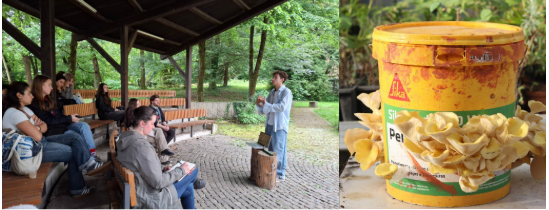
Who, where and why?
The project
Dilema Fungi is present in FCUL’s campus as mushroom production stations.
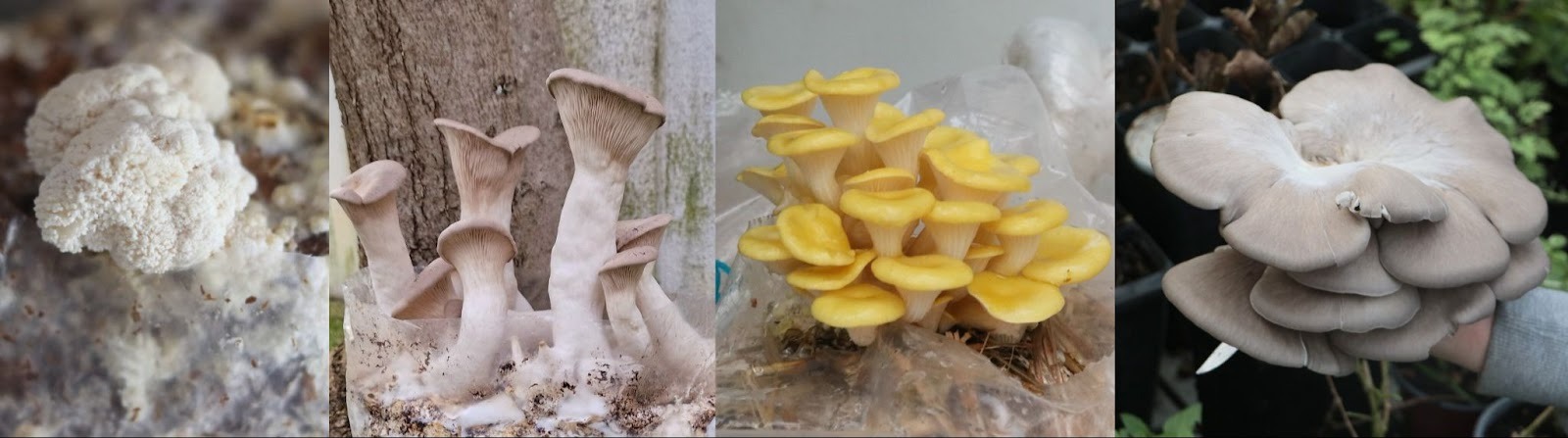
These small incubators were developed to retain and monitor temperature and humidity and automatically regulate these factors. The design and construction of these is made with the help of the engineer-arquitect Rafael Cruz and the biologist Miguel Sousa. These stations are developed with and for the students of FCUL in multiple free entry activities: construction of the structure, electronic system instalment, painting, mushroom inoculation. The mushroom production lectures are given by Diogo Ribeiro and the painting of the structures is performed in collaboration with FCUL’s scientific illustration group, with essential help from Mafalda Mendes.
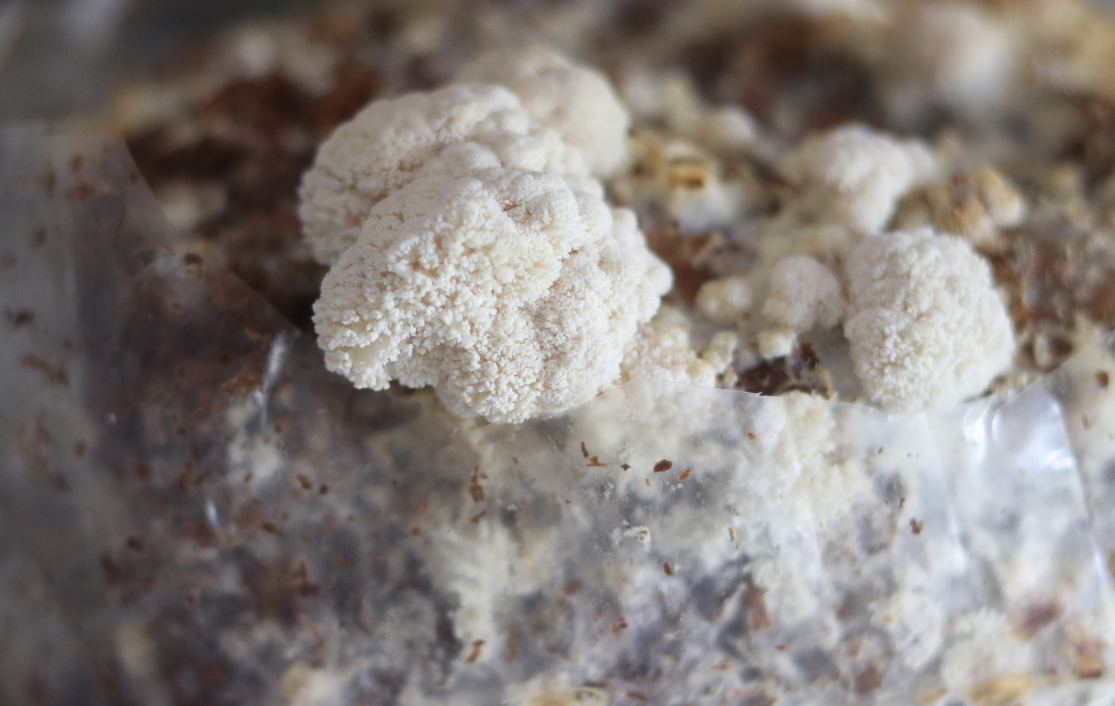
The project produces the following mushrooms, Grey Oyster, Yellow Oyster, King Oyster, Shiitake, Shimeji, Lionsmane, and others. For their own learning and research but also to highlight fungi and encourage FCUL’s community to use the stations as living examples in this field of biology.
Sustainable production: closing cycles and reducing consumption
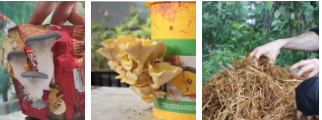
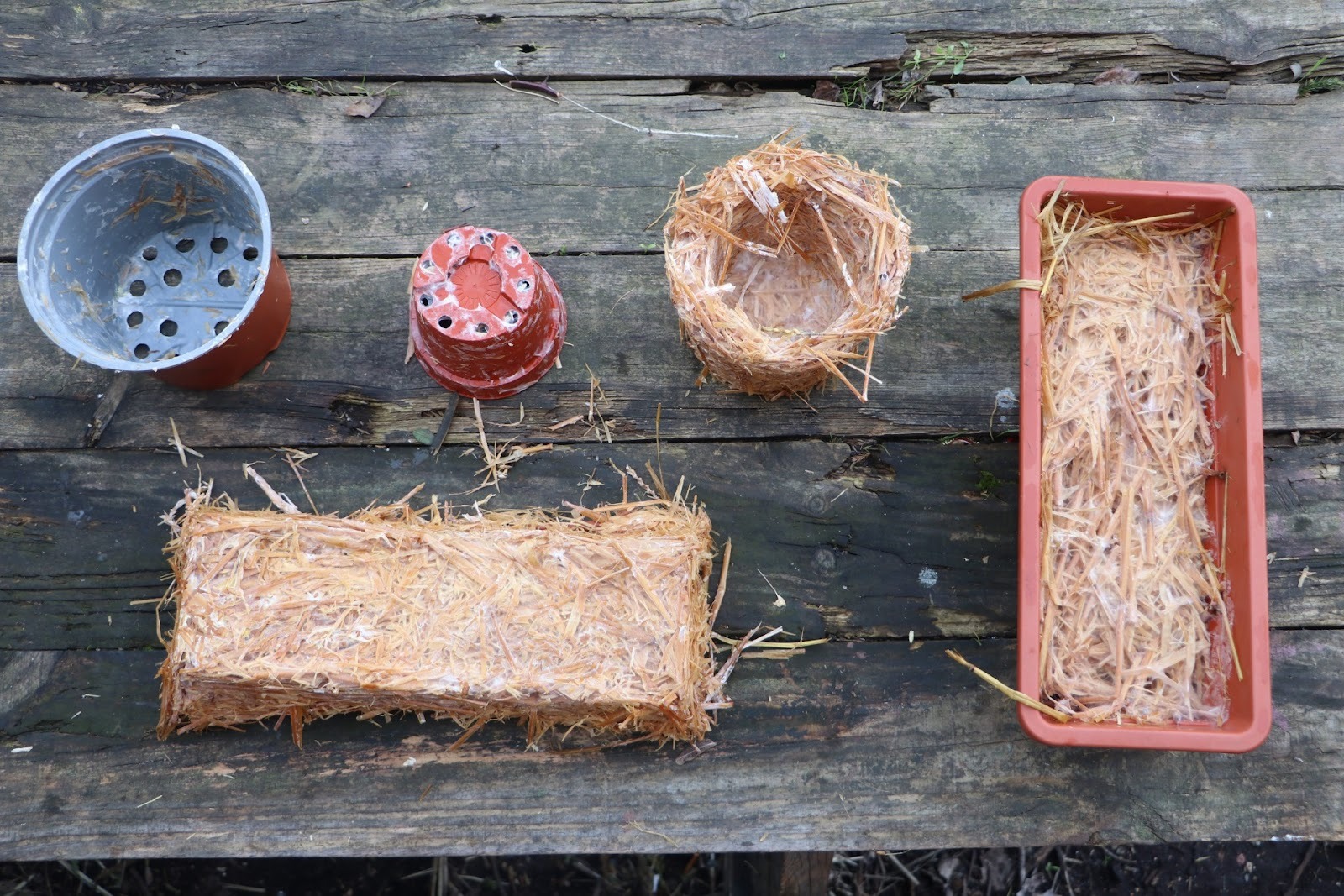
The project wants to make its production as sustainable as possible, by using various substrates and recipients: from the use of bags and coffee grounds from FCUL’s cafeterias, to the use of reused paint buckets, straw (agricultural waste) and sawdust (carpentry waste). Using as well HortaFCUL’s compost as a nutrient supplement.
From the lab to the field (and the field to the table)
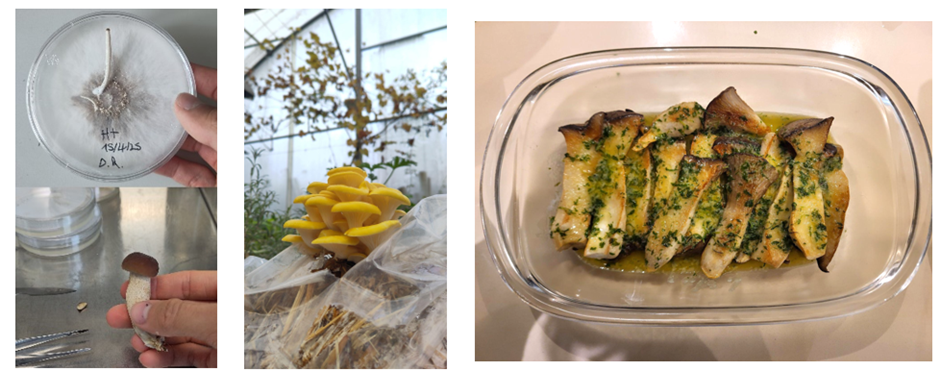
To produce mushrooms it’s needed mycelium, the stage of fungi life cycle that is used to inoculate them, a white network that is usually underground. The project produces its own mycelium from fresh mushrooms. Initially to better understand this process they counted with the help of Professor Margarida Souto Barata. The process is performed outside FCUL but also inside at the Plant Soil Department Lab from CE3C, with authorisation from Professor Cristina Cruz and supervision from researchers Inês Ferreira and Diana S. Pereira.
From the stations it’s collected data regarding biomass production, colonization speed and productivity. A bucket for example can produce 1-2kg of fresh mushrooms in the case of Pleurotus ostreatus (Grey Oyster Mushrooms).
Sharing the knowledge
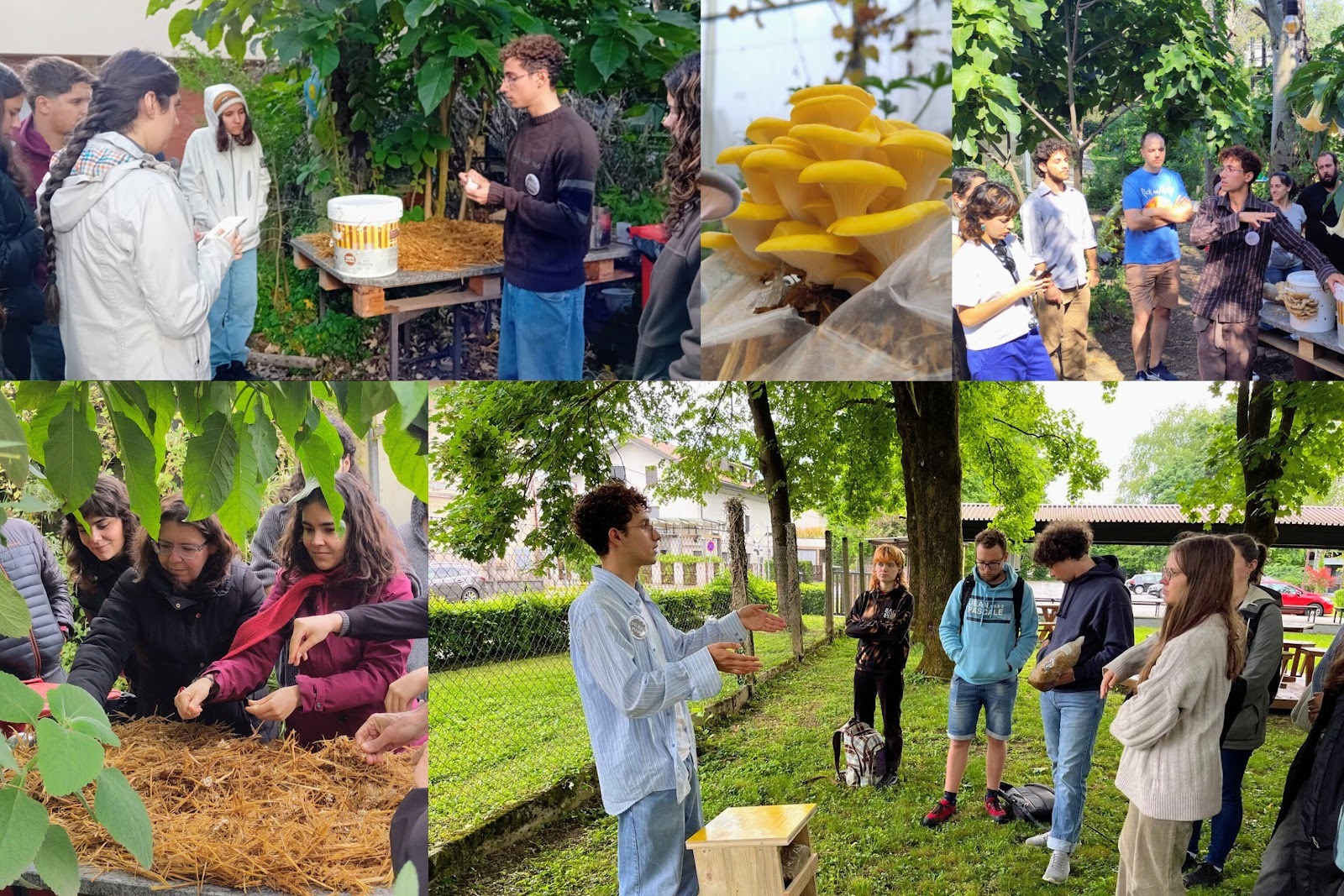
The first mushroom production workshop organized in FCUL, in 2023, had great feedback and after this experience the project was invited to share its knowledge nationally and internationally. In 2024 it organised lectures and workshops in London at Emmetts Garden Fungi Festival, at Beja’s Mushroom Festival, at Lisbon's Open Gardens Festival and in FCUL. Just in that year they counted with more than 100 people in the activities. The project works as well in the lecturing of practical lectures for the course of Ecological Sustainability from the Masters in Ecology and Environmental Management.
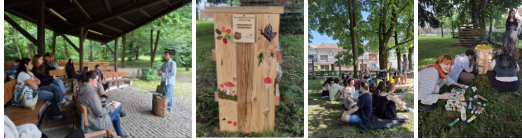
During Diogo's ERASMUS+ semester, he set up the "Pop-Up" mushroom production station on the campus of the Biotechnical Faculty of the University of Ljubljana in Slovenia. This initiative included several activities, which can be found in an article in the scientific journal les/wood (vol.II 2025). https://journals.uni-lj.si/les-wood/index
The University of Ljubljana formally thanked Diogo for this initiative.
The mission
With the help of the new team Diogo wishes to continue learning through practical experience and increase the project's impact in the teaching of biology and sustainability at FCUL. To do so he wants to involve more communities, produce more species with varied functional and nutritional benefits and perfect lab and production techniques. Furthermore, Diogo believes the project can create synergies between his academic and professional life, due to fungi’s crucial role in ecology, conservation and nutrition.
How to learn more?
The project is present on the following social media platforms, and you're likely to find Diogo and other project members at HortaFCUL's open days, always eager to show the Dilema Fungi stations and explain more about the project.
Coordinator: Diogo Ribeiro
Members: Donia Salgado, Jaca sousa, Mafalda Mendes, Miguel Sousa, Rafael Cruz
Instagram: @dilemafungi https://www.instagram.com/dilemafungi/
Email: dilemafungi@gmail.com
References about the project:
For more information, contact sustentabilidade@ciencias.ulisboa.pt.